


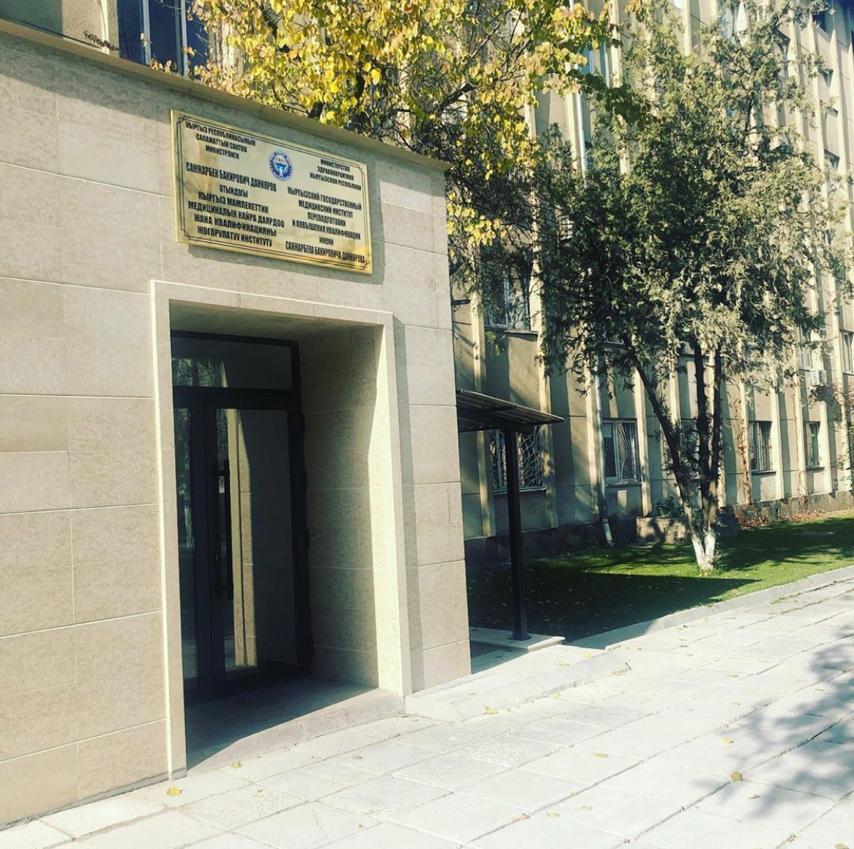
The Kyrgyz State Medical Institute of Retraining and Advanced Training (KSMIRE) is a state higher education institution implementing a system of continuous medical education for physicians, nurses, and other specialists working in the Kyrgyz healthcare system. KSMIRE was founded in 1992 by a Decree of the Government of the Kyrgyz Republic. KSMIRE also offers postgraduate training programs in internship, clinical residency, postgraduate studies, and doctoral studies across a wide range of medical specialties.
The institute’s slogan: “Learn with pleasure – treat with quality!”
The Institute’s Mission: To meet the needs of Kyrgyz healthcare professionals with in-depth theoretical knowledge and practical skills through the implementation of innovative educational programs based on the principles of evidence-based medicine. To create conditions for professional growth, facilitating the development of new competencies and the effective resolution of modern challenges, meeting the current needs of society and the country’s healthcare system.
The Institute’s educational objectives are aimed at achieving the mission and ensuring that specialist training meets the modern needs of the healthcare system.
• Ensuring training and continuous professional development of medical and pharmaceutical workers based on current scientific data, modern clinical approaches and principles of evidence-based medicine.
• Formation and improvement of professional competencies necessary for high-quality, safe and effective performance of professional activities.
• Providing practice-oriented training integrated with the activities of practical healthcare organizations.
• Development of clinical thinking, the ability to analyze professional situations, make informed decisions and bear responsibility for the results of professional activities.
• Formation of readiness to use modern medical, information, digital and simulation technologies.
• Development of skills of interprofessional interaction, communication with patients, colleagues and other participants in the healthcare system.
• Formation of commitment to the principles of professional ethics, legal norms, safety culture and respect for patient rights.
• Development of a research and analytical culture, the ability to use the results of scientific research and participate in the improvement of medical practice.
• Developing the ability for self-education, critical evaluation of one’s own activities and continuous professional development.
• Ensuring a flexible response of educational programs to changes in the needs of the labor market, healthcare system, regions and society.
Expected learning outcomes
Upon completion of the relevant educational programmes, the graduate/student, within the level of training and profile of the programme, should be able to:
• apply fundamental, clinical and professional knowledge in solving practical problems;
• carry out professional activities in accordance with established competencies, regulatory requirements and modern standards of medical practice;
• collect, analyze and interpret professionally significant information and use it to make informed decisions;
• select and apply modern methods of prevention, diagnosis, treatment, rehabilitation and monitoring in accordance with the profile of training;
• ensure the quality and safety of medical activities, identify risks and take measures to prevent them;
• use the principles of evidence-based medicine, critically evaluate scientific information and apply current clinical guidelines and protocols;
• use information systems, digital educational and medical technologies in professional activities;
• effectively interact with patients, their legal representatives, colleagues and representatives of other professional groups;
• comply with the standards of professional ethics, deontology, legislation and the rules for the protection of personal data;
• analyze the results of their own professional activities, identify needs for further training and carry out continuous professional development;
• participate in teamwork, organizational and quality improvements in the healthcare system;
• apply research and analytical approaches to solving professional problems and improving practice.
Vision:
To become a leading educational center in the system of postgraduate and continuing professional education, recognized internationally for the quality of education, facilitating the training of highly qualified specialists who are proficient in modern innovative technologies and capable of effectively addressing modern healthcare issues, taking into account the requirements of the practical healthcare sector.
- Ensure sustainable development through continuous improvement of infrastructure, training programs and quality control system.
- To create an educational ecosystem capable of quickly responding to changes in medical science, labor market demands, and societal expectations.
- Integration of sustainable development and environmental responsibility principles into the educational process.
- Attracting and retaining the best talent by creating a favorable environment for professional growth and development.
Connection of learning objectives and outcomes with educational programs
Based on the current institutional objectives and learning outcomes, each educational program of the Institute formulates its own specific educational goals, objectives and expected learning outcomes, taking into account the profile and level of training.
• The learning outcomes of educational programs are specified through competencies, disciplines, modules, practical training, forms of current, midterm and final control.
• Correspondence of the content, teaching methods, educational technologies and assessment tools to the declared learning outcomes is confirmed by curricula, work programs, teaching and methodological complexes, competency matrices, assessment materials and monitoring results.
• The expected learning outcomes of educational programs must correspond to the mission of the Institute, professional requirements, the needs of practical healthcare and the expectations of employers.
Положение КГМИПиПК им. С.Б. Даниярова
акт обследования безопастности рабочих мест
заключение пожарнной безопастности 2021
заключение пожарнной безопастности 2025